Child Development
The 2-Year Progress Check at Nursery: What Your Child's Key Person Writes and Why
Written by Lisa, Owner & Manager at Little Starlings Nursery
Parents often ask us about the 2-year progress check nursery settings are required to carry out. It can sound formal, and I understand why it prompts questions. In practice, it is much more like a conversation than a test, and it is one of the things I find genuinely useful as a way of making sure we are all working together for your child.
What is the 2-year progress check?
Between the ages of two and three, practitioners in all early years settings are required by law to review each child's progress and produce a short written summary for parents. This is set out in the EYFS statutory framework, which governs how nurseries like Little Starlings Nursery Balham plan for and support children's learning.
In Wandsworth, the check is completed between 24 and 36 months. It is written by your child's key person, who then goes through it with you directly. It is not something that lands in your inbox without explanation. You are part of the process.
What does it cover?
The summary focuses on three areas of development, known as the prime areas:
- Personal, social and emotional development — how your child is managing feelings, building relationships, and growing in confidence
- Physical development — their movement, coordination, and growing independence with things like getting dressed or using cutlery
- Communication and language — how they are expressing themselves, understanding what is said to them, and engaging with others
These three areas are prioritised at this age because they underpin everything else. A child who feels secure, can communicate, and is moving freely is in a strong position to build on all the other things nursery life offers.
The summary will note where your child is doing well and, just as honestly, where a little extra support might help. That second part is not something to worry about. It is the whole point of the check — to make sure nothing is quietly missed.
Who writes it, and how do we know what to write?
At Little Starlings, your child's key person builds their understanding gradually, through everyday observation and time spent together. By the time we sit down to write a progress summary, we have a clear and genuine picture of your child as an individual.
I always say to parents: your child's key person knows things about your two-year-old that even you might not have seen, because they see them in a different context. How they respond when a friend is upset. Whether they seek out a particular kind of play when they need to settle. What happens when something is genuinely challenging for them.
That knowledge is what makes the written summary meaningful rather than just a form to tick.
How does it connect with the health visitor review?
You may already be aware that your health visitor also carries out a developmental check at around two years old. In Wandsworth, these two reviews are brought together as the Integrated Review at 2. Information is shared between the nursery and health services so that the people supporting your child are looking at the same picture rather than working in separate silos.
If your child's key person and your health visitor both notice something worth exploring, that joined-up approach means you will hear a consistent message and, if needed, get support more quickly.
What should I do to prepare?
Honestly, not very much. You do not need to coach your child or arrive with a list of achievements. The most useful thing you can do is come ready to share what you are noticing at home, because that context helps us write a more complete and accurate summary.
Things worth mentioning:
- Any changes at home (a new sibling, a house move, a change in routine)
- Words or phrases your child uses at home that we might not hear at nursery
- Anything that has felt harder lately, or anything that has really clicked
The conversation should feel like two people who know the same child comparing notes. That is genuinely how I think of it.
A note on what comes next
For most families, the progress check will confirm that things are going well and give you a clear sense of what to look forward to over the coming months. Where extra support is identified, that is a starting point, not a verdict. Early identification means early help, and in our experience the families who engage with that process openly nearly always look back and feel glad they did.
It is also worth knowing that the EYFS statutory framework is being updated, with a new version applying to group and school-based providers from 1 September 2026. We will keep parents informed as any changes affect how we carry out the review.
If you are thinking about nursery for a two-year-old and would like to understand how we work in practice, the best thing to do is come and see us. You can book a show-around at a time that suits you, meet the team, and get a feel for how we do things at Little Starlings. We are always happy to talk through questions like these face to face.
Come and see us for yourself
Book a relaxed tour of Little Starlings Nursery and meet our team.
Book a tourOther guides you might like
Child Development
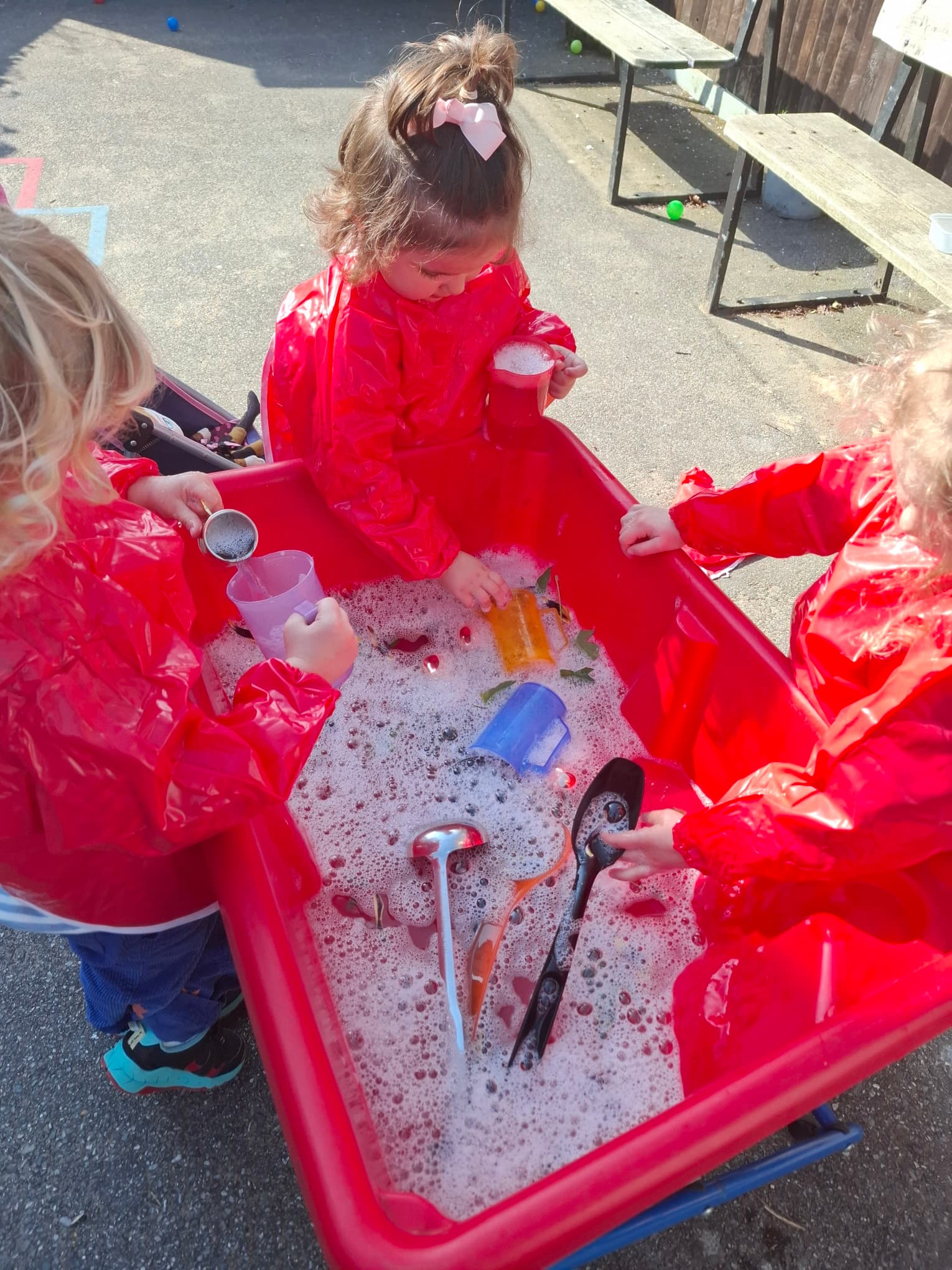
Why We Love Messy Play (And Why Your Child Does Too)
Messy play might look chaotic, but it's one of the most important ways children learn and grow. Discover why we embrace the paint, mud, and flour at Little Starlings - and how it benefits your child's development.
Child Development
Raising Bilingual Children in Early Years: What We See at Little Starlings
Many children at Little Starlings grow up hearing more than one language at home. Here is what we observe day to day, and how we support bilingual children to thrive.
Child Development
Why Daily Outdoor Play Matters for Young Children, and How Our Balham Nursery Makes It Work Year-Round
Outdoor play is essential for children's physical, emotional and cognitive development. Find out why Little Starlings Nursery prioritises outdoor time every single day, whatever the weather brings.
Frequently asked questions
When exactly does the 2-year progress check happen?
In Wandsworth, the check is carried out between 24 and 36 months. There is a window rather than a fixed date, which allows your child's key person to choose a point when they have a thorough picture of your child's development. It is completed as a conversation with you, not just handed over as a document.
What is the Integrated Review at 2 and do I need to do anything extra?
The Integrated Review at 2 combines the nursery's progress check with the health visitor's developmental check at around the same age. In Wandsworth, information is shared between the two so that health and early years professionals are looking at the same picture. You do not need to organise this yourself — it happens as part of both reviews.
Who is my child's key person at Little Starlings, and how do I find out more about how they support my child?
Every child at Little Starlings Nursery Balham has a dedicated key person who gets to know them as an individual. You can stay closely involved through weekly updates on the Tapestry journal and termly progress reports. The best way to understand how it all works in practice is to book a show-around and meet the team in person.
What happens if the progress check identifies an area where my child needs support?
It is more common than many parents expect, and it is not something to worry about. The check exists precisely to spot things early. Your child's key person will talk through what they have noticed and what might help. Early identification usually means straightforward, well-targeted support rather than anything more involved further down the line.