Nutrition
Healthy Eating for Toddlers: What We See Working at Nursery
Written by Lisa, Owner & Manager at Little Starlings Nursery
Mealtimes with toddlers can be unpredictable. One day they eat everything in front of them. The next, the same food is pushed to the edge of the plate with great determination. If that sounds familiar, you are not alone. It comes up in conversation with parents at drop-off and pick-up more than almost any other topic.
I've worked in early years for a long time, and one of the things I find most reassuring to share with parents is this: what happens at nursery and what happens at home often looks very different for the same child. That gap is more common than most people realise, and it tells us something useful.
Why children sometimes eat better in a group
We see it regularly here at Little Starlings. A child whose parents tell us they barely touch vegetables at home will sit down at snack time, look at what their friends are eating, and give it a try. There is something about sharing food alongside other children that removes the pressure of a direct adult-to-child dynamic.
It is not magic, and it does not always work, but the social element of eating together is genuinely significant at this age. Children between 16 months and five years are watching each other constantly. Food is no different from any other area of learning in that sense.
What we provide and what that looks like in practice
At Little Starlings we provide a healthy mid-morning snack each day. We keep snacks varied and seasonal where we can, and we always make sure children have access to fresh water throughout the session. Parents provide packed lunches, which means we get a real window into what children are used to eating at home, and it opens up useful conversations.
We are not here to judge packed lunch contents. What we do is notice patterns. If a child is consistently leaving most of their lunch, or seems tired and unsettled in the afternoon, it is worth having a gentle conversation with their key person. That is exactly the kind of thing a key person is well placed to notice and raise with you.
Simple things that tend to help
Based on what we observe day to day, a few things seem to make a genuine difference for toddlers and food:
- Routine helps more than variety. Offering food at consistent times gives toddlers a sense of predictability. They tend to eat more willingly when they are not surprised by mealtimes.
- Small portions reduce overwhelm. A plate piled with food can feel daunting. Smaller amounts, with the option for more, tends to work better.
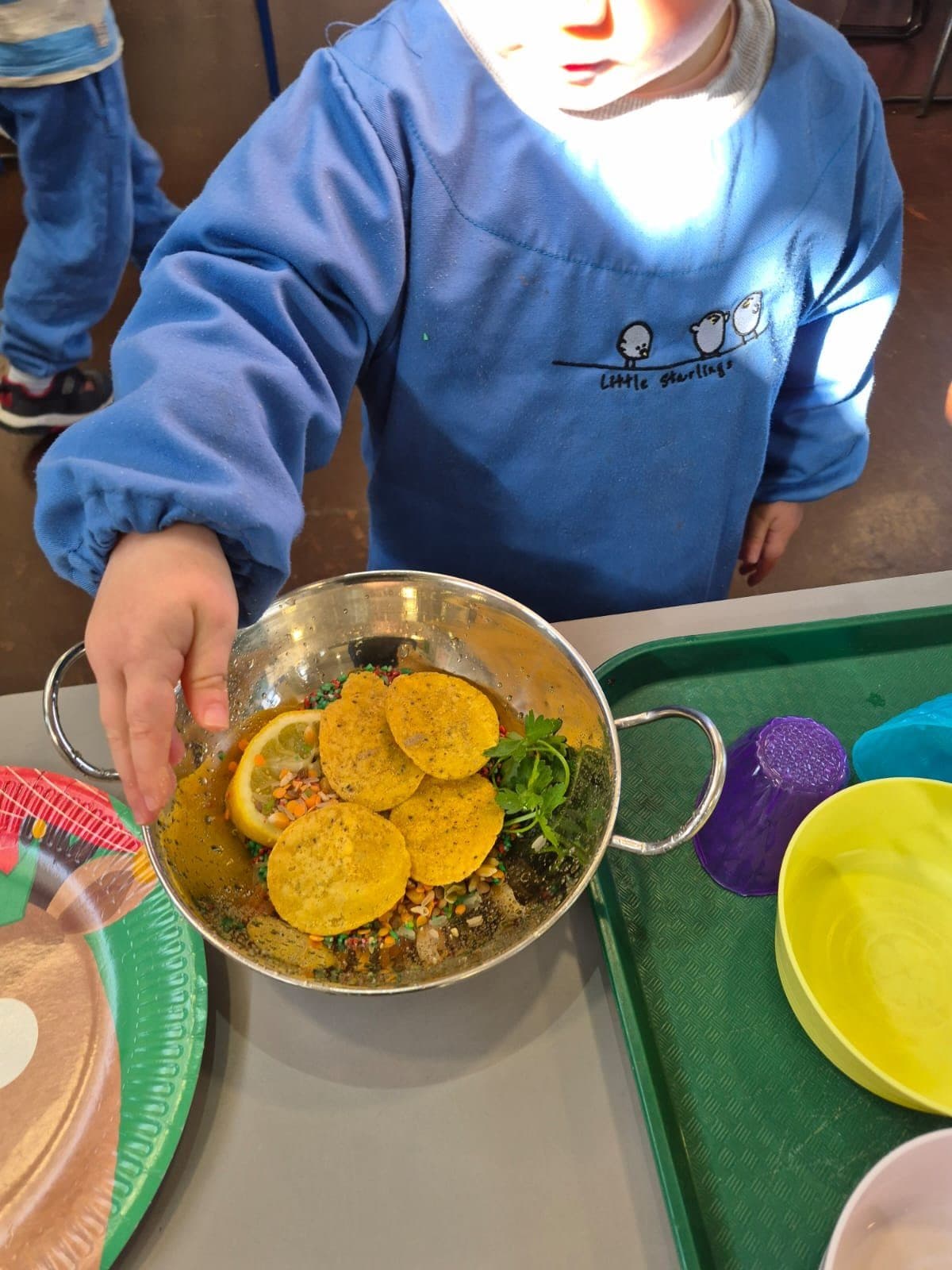
- Involving children in food preparation. Even at nursery age, letting children help wash fruit, pass vegetables, or stir a bowl builds their connection to food. We do this during some of our activities and the difference in willingness to taste things is noticeable.
- Eating alongside others. Whether that is at nursery or at home, sitting and eating with your child rather than watching them eat changes the atmosphere of the mealtime.
- Not making food a battleground. This is easier said than done, I know. But when mealtimes become tense, children pick up on it quickly. A calm, low-key approach tends to produce better results over time than coaxing or bargaining.
What is actually normal at this age
Neophobia, which is a reluctance to try new foods, is very common between the ages of two and five. It can appear suddenly in a child who previously ate well, which can be alarming for parents. In most cases it is a normal developmental phase rather than a sign that something is wrong.
The NHS Start for Life pages have some helpful guidance on nutrition and eating habits for young children, and I often point parents towards those when they want more detail than I can offer at the nursery gate.
The main thing I would say from experience is that repeated, low-pressure exposure to a food tends to work better than insisting a child eats it. We might offer the same vegetable ten or fifteen times before a child decides they are interested. That is normal, and it is worth persisting without making it a point of conflict.
How we can support you
If mealtimes at home feel like a struggle, do mention it to your child's key person. We can share what we are noticing at nursery, flag anything that might be relevant, and think with you about whether there are small things worth trying. It will not always be within our remit, and we will always say so honestly if it is something worth raising with your GP or health visitor.
Good nutrition in the early years matters, but so does a child's relationship with food more broadly. We try to keep mealtimes at nursery calm, social, and positive, and we hope that rubs off a little at home too.
If you would like to see how we approach the day, including snack time, I would love to show you around. You can book a show-around at a time that suits you, and it is always a relaxed, no-pressure visit.
Come and see us for yourself
Book a relaxed tour of Little Starlings Nursery and meet our team.
Book a tourOther guides you might like
Settling In
Your Child's First Week at Nursery: What to Expect at Little Starlings
Starting nursery is a big moment for your child and for you. Here is an honest, practical guide to what the first week looks like at Little Starlings Nursery in Balham.
Settling In
Morning Routines That Make Nursery Drop-Off Easier
Getting out the door with little ones doesn't have to be stressful. Our Balham nursery team shares practical tips for creating a calm morning routine that sets everyone up for a better day.
Settling In
Separation Anxiety at Nursery Drop-Off: What to Expect and How to Help
Tears at the nursery gate are completely normal. We explore what causes separation anxiety, practical strategies that help, and what you can realistically expect over those first few weeks.
Frequently asked questions
My toddler eats well at nursery but refuses the same foods at home. Is that normal?
It is very common, and we hear it from parents regularly. The group setting, eating alongside other children, and the absence of the usual home dynamic all make a difference. It is not a reflection on your cooking or parenting. Over time, positive experiences at nursery often gradually shift things at home too.
What snacks do you provide at Little Starlings?
We provide a healthy mid-morning snack each day, and children have access to fresh water throughout the session. Parents provide packed lunches. If you have questions about allergies or dietary requirements, that is something we would always discuss carefully before your child starts with us.
How do I know if my child is eating enough at nursery?
Your child's key person will keep an eye on things day to day and will flag anything that concerns them. We share updates through the Tapestry journal weekly, and you can always ask at pick-up. If appetite changes alongside other signs, such as low energy or unsettled behaviour, we would let you know promptly.
Can I come and see how mealtimes and snack time work before my child starts?
Absolutely. The best way is to book a show-around, where you can meet the team, see the space, and ask questions like this in person. Visits are relaxed and there is no pressure. We are always happy to walk you through a typical day and what snack time looks like for the children.